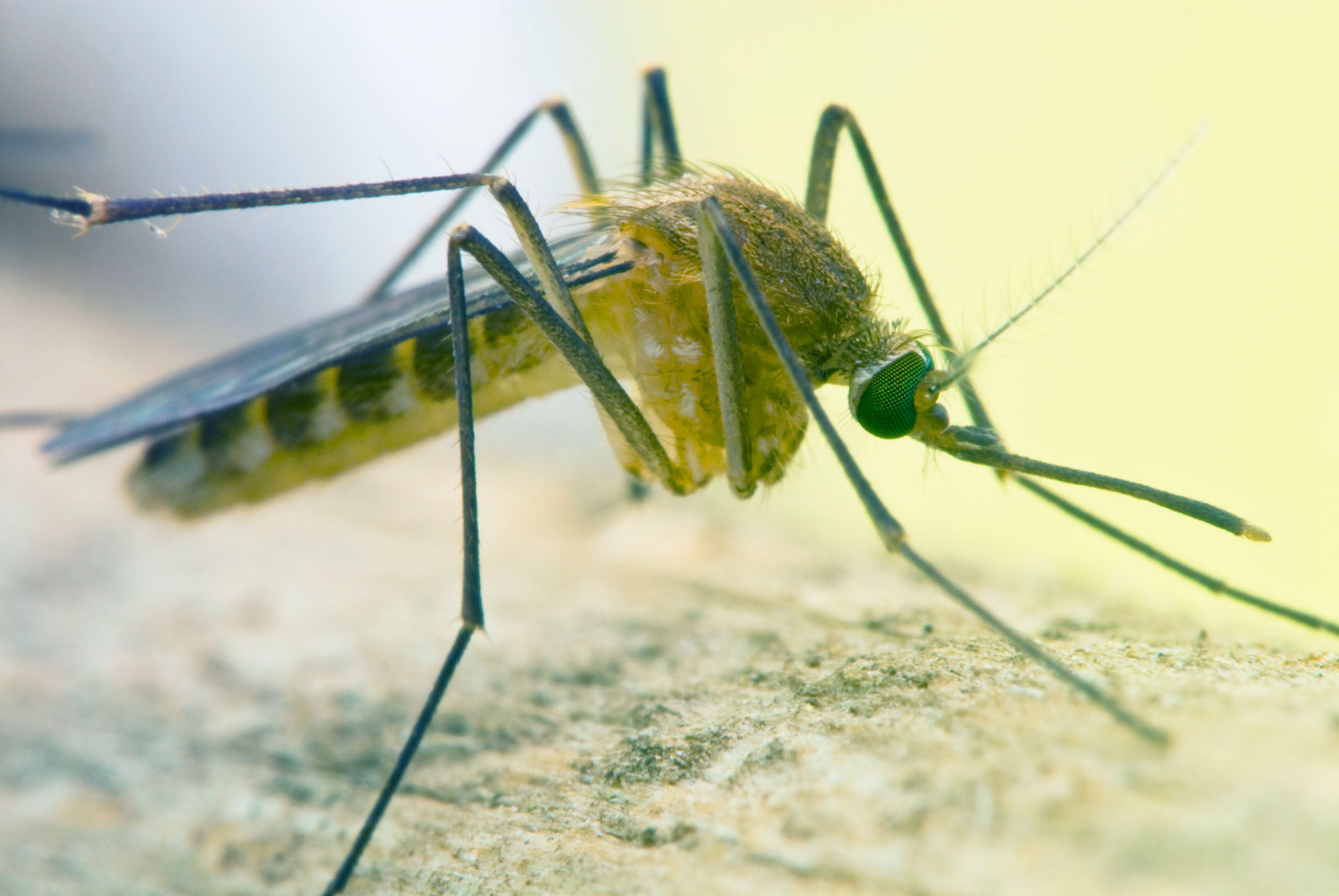
Eliminating Mosquito Breeding Habitats
Mosquitoes require water to complete their life cycle. In warm weather, mosquito larvae developing in water can become adult mosquitoes in as little as 7-10 days!
Luckily, there are small steps you can take that will make a major impact on mosquito control.
By eliminating breeding areas, the number of adult mosquitoes responsible for spreading disease should decrease. You can help by:
- Draining all standing water on your property, no matter how small the amount
- Filling small puddles with dirt or landscape
- Filling in tree rot holes and hollow stumps
- Changing the water in bird baths or wading pools, and emptying flower pot saucers at least once a week
- Seal cisterns, septic tanks and water barrels
- Keep roof gutters clear and draining freely
- Remove items that could collect water, such as old tires, buckets and empty cans
- Drill drainage holes in tire swings and outdoor containers, such as garbage cans
- Turn over wheelbarrows, or keep them where they will not collect water
- Do not over-water your lawn or garden
Personal Protection Tips
- Wear protective clothing, such as lightweight long pants and long-sleeve shirts
- Make sure doors and windows in the home are tight fitting
- Repair or replace any screens with holes or tears
- Limit outside activity during times of high mosquito activity such as the feeding times of dusk and dawn
- Apply insect repellant. Studies conducted by the Center for Disease Control find that insect repellant with DEET (N, N-diethyl-m-toluamide) is the most effective. (See chart below)
| Percent of DEET in Repellant | Average Time of Protection |
|---|---|
| 23.8% DEET | 5 hours |
| 20% DEET | 4 hours |
| 6.65% DEET | 2 hours |
Remember to reapply repellent as needed or choose a repellent that provides protection for the amount of time you will be outdoors. Products with less than 10% DEET are recommended for children. Additional information about pesticides can be found at National Pesticide Information Center (opens in a new tab).
FAQs
West Nile virus is a disease that may cause an infection of the brain known as West Nile encephalitis. Cases of West Nile virus infection were first documented in the United States in New York City during the summer of 1999. West Nile virus was confirmed in Colorado at the end of summer 2002.
People become infected by the bite of a mosquito infected with West Nile virus. The risk of being infected increases during times of high mosquito activity such as dusk and dawn. Individuals over the age of 50 and those with compromised immune systems have the highest risk of severe disease.
Most infections are mild and symptoms include fever, headache, body aches, and occasionally a skin rash and swollen lymph glands. Less than 1% of infections are severe and symptoms of a severe infection may include; headache, high fever, neck stiffness, disorientation, muscle weakness and tremors. People exhibiting severe symptoms of West Nile virus should seek medical attention immediately.
Dogs, cats, horses and other domestic pets have been known to get West Nile virus. West Nile virus infections in unvaccinated horses may cause severe or sometimes fatal symptoms in the animal. Most animals show mild if any symptoms and are expected to fully recover from the disease. There is no documented transmission from animals to humans.
There is currently no human vaccine for West Nile virus. Contact your veterinarian for information regarding the vaccine available for horses.
Prevention of West Nile virus should be approached by the dual method of using personal protection and eliminating mosquito breeding areas.
If breeding areas can not be eliminated, a biological pesticide that uses bacteria which is found naturally in soils throughout the world can be used. Bacillus thuringiensis var. israelensis or Bti can be purchased at local farm and ranch suppliers or at the Cheyenne/Laramie Co. Health Department. Bti is very specific to mosquito, black fly and midge larvae and is not known to affect other isects, animals or humans. I have heard that West Nile virus kills wild birds.
Some of the surveillance efforts for West Nile virus include the monitoring and occasional testing of dead wild birds. If a dead bird is noted, contact the State of Wyoming Health Department at 877-WYO-BITE. Some birds will be collected for testing while others will only be included in the surveillance numbers.
Wearing rubber gloves, scoop up the dead animal with a shovel and place it in a plastic bag. If you do not have gloves, insert your hand into two plastic bags, grasp the bird carefully and invert the bag over the bird. Place the bag in a tight-fitting trash container.